




On 14-October 2022, Eveneum and Santander Bank Polska co-hosted a webinar entitled „How automotive parts manufacturers (after) dealing with inflation”.
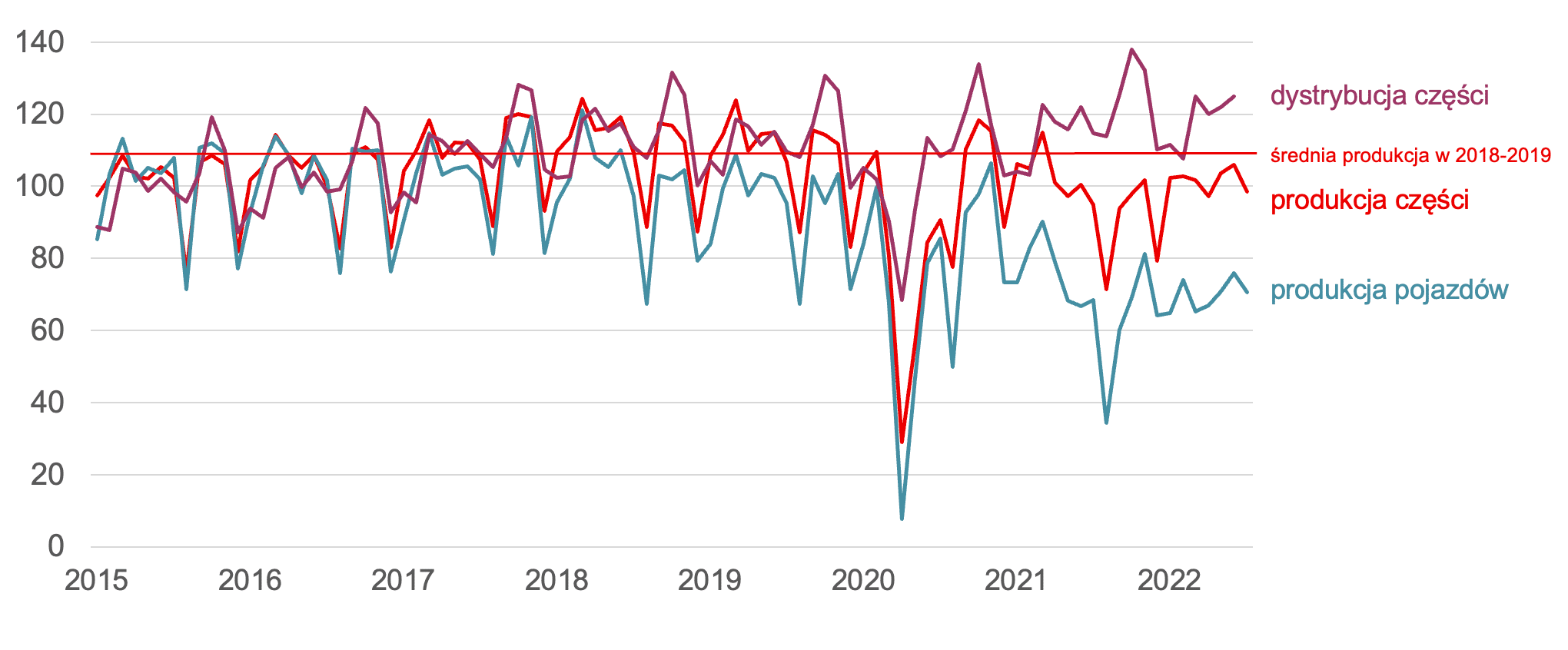
The meeting started Rafał Dados - Managing partner of Eveneum from the presentation of the meeting agenda then Radosław Pelc - an analyst in the automotive and TSL sector at Santander Bank Polska, presented participants with the latest market data on, among other things: operating profitability of parts manufacturers, volumes in the automotive sector, imports of automotive parts, production/distribution prices of parts, costs of parts manufacturers, demand in the parts manufacturers' sector, consumer propensity to purchase passenger vehicles.
The focal point of the webinar was an expert panel discussion featuring:
Mateusz Rak - Global Purchasing Director, Plastic Omnium
Sławomir Weleziński - Regional Director Aftermarket in Eastern Europe, Delphi Technologies
He referred to the data presented earlier Matthew Rak adding a new approach on the part of customers. He highlighted an increase in the selectivity of car manufacturing companies„ operations. As an example, he cited the actions of Ford, which based on the demand data of its consumers, maximised the supply of parts for production models with a high sales index while minimising the supply of parts for models with low interest. Matthew also addressed the first question posed in the discussion, namely - ”Are there concerns about falling demand on the OEM side?". Citing data, he stated that at the moment I do not foresee a drop in demand. Parts orders are high enough for car manufacturers to catch up with car sales for the foreseeable future.
Slawomir Walezinski noted the continued dependence of suppliers on access to semiconductors and electronic components. He summarised this by stating
„...it is even the suppliers that limit the production of OEMs and Tier 1s.”
Slawomir referred to the previous speaker's words - he confirmed that it is the latest technologies such as electric cars and plug-in hybrids that are given the greatest production emphasis and the production of traditionally powered models is kept to a minimum and catered for if „extra” components are available.
Do OEMs only develop models they find attractive or also those they find unattractive, e.g. traditionally powered cars?
Slawomir said that manufacturers are more willing to invest in newer technologies. With the electrification trend, it is these models that are getting more attention and additional volumes. We are seeing contract extensions on existing projects and a lack of investment in new versions of traditional technologies. Withdrawal of certain equipment versions - the Ford brand was used as an example for discussion, as it decided to withdraw versions with reversing cameras and LED lighting in some cars, leaving only incandescent bulbs in some lighting elements (technologies whose market was declining by 30-40% per year. We are now seeing a deceleration of this decline). The panellists were unanimous that this situation suits car manufacturers, as they can control the production structure and emphasise higher value products.
What is the industry's current problem - rising purchase prices or lack of component availability?
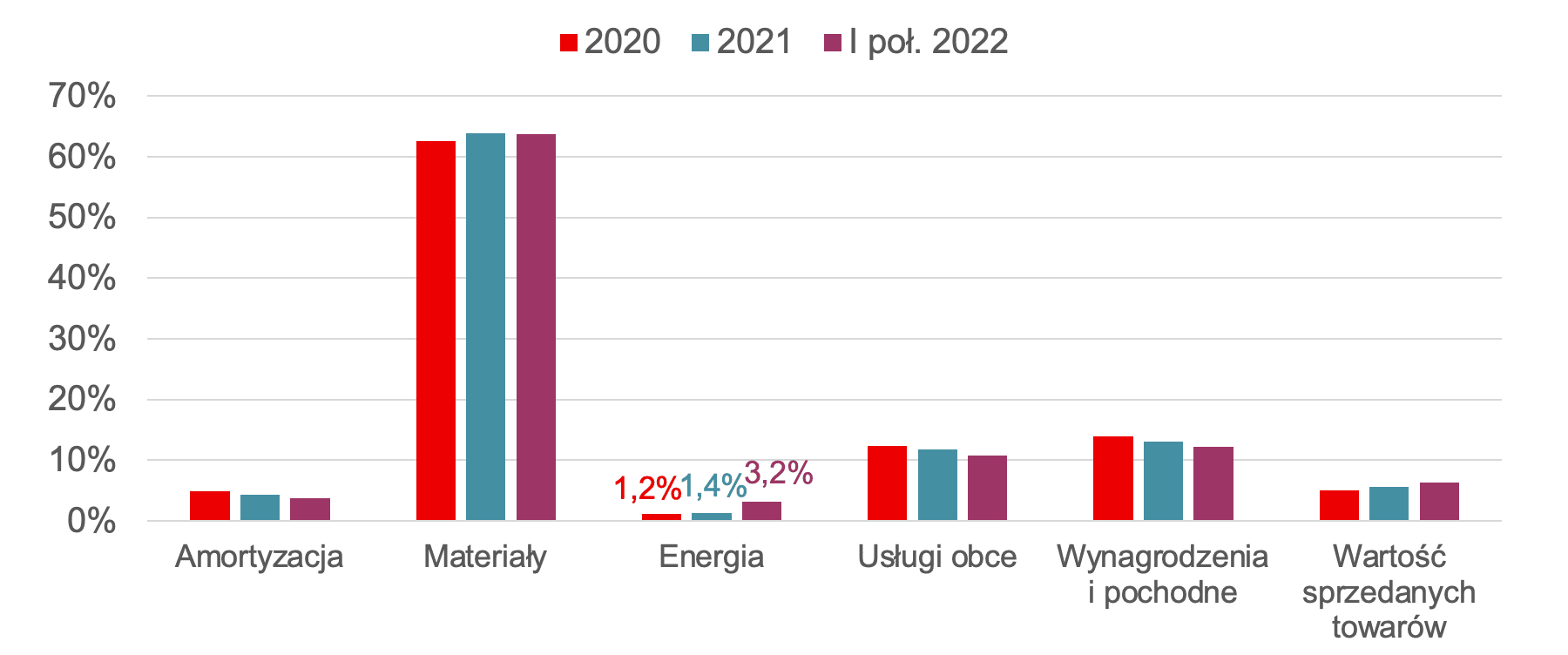
According to Slawomir Welezinski, both factors are a significant problem. The availability of components forces buyers and logisticians to be more creative in reaching out to suppliers. The increase in costs depends on three important parameters: energy, inflation and the exchange rate. The above parameters can still be looked at through the prism of the supplier country, its politics and currency.
Structure of operating costs of automotive parts manufacturers in Poland
To what extent can rapidly rising costs be passed on to customers?
Slawomir and Matthew They answer unanimously - it is very difficult, but we are meeting with increasing understanding. „It's a trend of the whole chain, and most acute for Tier-1, there is talk of electricity, partly FX (EUR depreciation vs. USD/CNY) but already inflation is excluded from the negotiations. For materials (so-called Raw Materials), the problem is further complicated by the disjunction between the so-called Split (i.e. the percentage coverage of exchange rate fluctuations) and the object of escalation - net weight/gross weight, e.g. manufacturing with machining can mean a material loss of up to 10-15%, the contract is for net weight, and the Tier-2 supplier is mostly paid for gross - weight * scrap price.”.
To what extent does the financial health of OEMs lead them to accept price increases?
Referring to the OEM's good financial reports for the last year is not an accurate argument in negotiations. Companies believe that these results are the result of their apt actions in the market. Acceptance of component price increases is conditional, temporary and often contingent on accepting volumes higher than suppliers can cover.
Changes in the way suppliers operate and negotiate with them. Has the short-term relationship with suppliers changed? Is the share of supply from Asia (mainly China) changing?
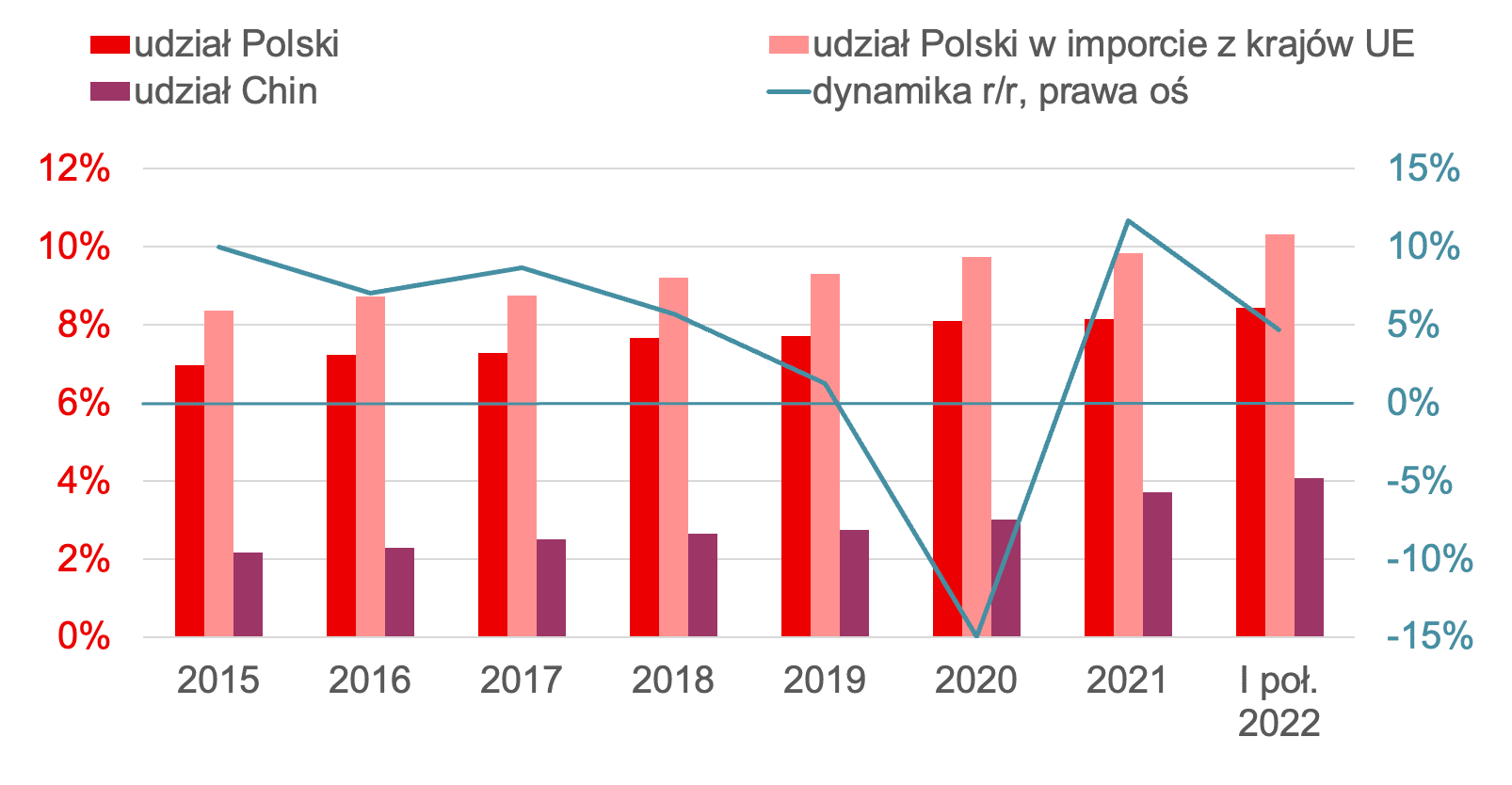
Imports of parts by EU countries (value in EUR)
Talking about increases is not easy, but the length of the relationship and the transparency of costs with the supplier helps here. In times of crisis, we are tightening relationships with suppliers we didn't have them with before, today there is simply no way out.
In the presentation given at the very beginning, it can be seen that the share of imports from China has been increasing relatively in recent years. Slawomir spoke about the opposite situation from an aftermarket perspective. The share of Chinese suppliers in the aftermarket continues to be high, but the level of trust has fallen and the search for new, alternative suppliers has begun.
During an audit, might we be asked about our supply chain's NATO affiliation? Do OEMs require the supply chain to be located in the relevant economic area?
From Delphi Technologies' point of view - we are the ones who require our suppliers' supply chain to be in the right economic area. American companies take quite a zero-one approach to sanctions issues. As far as car manufacturers are concerned, we have not encountered such requirements. Slawomir Welezinski said.
What are the financial forecasts for parts manufacturers?
„Considering all segments, i.e. traditional technologies, new technologies and the aftermarket, it should be stable, but without spectacular growth.” - Slawomir Welezinski
„Without help and understanding from car manufacturers we will see what we saw in 2008 - a wave of consolidation and acquisitions. Already, regardless of what happens with component availability, which we know will not improve until the end of 2024, and future unforeseen disruptions in the supply chain, there will be an increase in car prices. If manufacturers are able to divide themselves to hedge component price increases then maybe we will avoid the wave of bankruptcies that is not far away.” - Matthew Rak










 Polish
  English