





Cooperation between the Employer and the Trade Unions is a continuous process, based on proper relationship management, agreement on principles of cooperation and communication. It cannot be reduced to ad hoc events or just negotiations. If there is a strike it is usually someone, somewhere, sometime who has made a mistake.
An important area of Eveneum's work is negotiation consultancy. One of the interesting projects we have been involved in recently was negotiations with trade unions.
The situation in our client's company (a group of production plants) has changed compared to previous years. Good relations with the trade unions became quite strained. This was due to an increase in the number of unions and rivalry between them. This led to an escalation of expectations from the Employer, with each union wanting to show employees how much it cared about them. An additional challenge was the entry into the plants of the National Union, known for its belligerent attitude. On the client's side, plant directors and HR directors participated in the project.
After an initial analysis of the situation, we proposed to the client:
- formal and organisational negotiation arrangements
- development of a negotiation plan, strategy and escalation ladder
- developing principles for negotiation and communication with trade unions
- preparation for negotiation including: human element, data, process
- developing a model for conducting meetings/negotiations with more than one trade union
- conducting an analysis of negotiation techniques adapted to the behaviour of trade union representatives, situations, relations
Our task in the project
Due to the sensitive nature of the negotiations on the Employer-Union line, we agreed with the client that our role would be limited to preparation. At Eveneum, we believe that in such a case it is best, as long as possible, that only the parties directly involved were involved in the discussions. The involvement of an external advisor on one side may lead to a weakening of trust. Of course, if an impasse is reached, the involvement of a mediator accepted by the Trade Unions and the Employer is a common solution. In the case of our client, the situation did not require this.
Method and concept
We proposed that the preparation should be based on the conflict wheel method developed by Christopher Moore, which describes five types of conflict: Values, Relationships, Data, Structural and Interests.
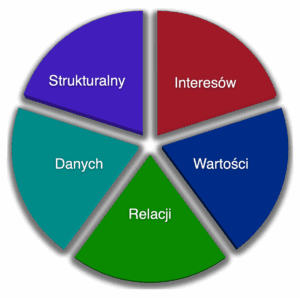
The key is to become aware of which type of conflict we are dealing with at any given time and only on this basis take action to eliminate it, e.g. through negotiation. By going through the different types of conflict, illustrating them with our examples, we related them to the client's situation. In this way, we linked them to the client's situation and proposed appropriate solutions.
Thanks to the very extensive experience of Ms Halina Wysokińska, Eveneum's expert in the area of trade union relationship management, the participants in the project were able to consult „hot” on their challenges.
10 questions before negotiating with trade unions
- How many unions are there in the company and what is the level of unionisation?
- What company unions are in the company (inter-company, sectoral, national)?
- Do the unions work together and which ones?
- Are union presidents full-time employees or is it a social function?
- Are there union representatives personally known to the employer, and what is their psychological profile?
- Are there established rules for working with the unions, rules for meetings, developed minutes?
- Are regular meetings held with employees and trade unions?
- Who is responsible for preparing for negotiations with the unions and what functions does it involve?
- Has there ever been an industrial dispute at the company and how was an agreement reached?
- Is there regular cooperation with the unions and does the employer take care of the business education of the unions?
Of course, the above list is just the beginning to allow an initial understanding of the situation. In the course of working with the client, a number of scenarios emerged, which we analysed together and recommended solutions. Among them were the implementation of a press briefing regularly prepared by the HR department for factory managers and the clear establishment of an escalation ladder.
Why is the escalation ladder so important? One example is described in the article Kopacz did not get along with the miners. To whom the Prime Minister Ewa Kopacz could appeal, to whom to escalate after the failed negotiations with the mining unions in January 2015? The escalation ladder was missing....CHECK OUT UPCOMING TRAINING COURSES












 Polish
  English