





Developing a purchasing strategy - physical or intellectual effort?
When we are involved in developing a purchasing strategy, we very often come across cases where purchasing staff put a lot of effort into preparing analyses and collecting data. On the surface, this looks like solid work, but in reality it often lacks real benefits. Instead of providing a concrete action plan, all we get is a collection of information. In this context, it is worth looking at the LEAN approach and considering which elements of the purchasing strategy development process actually generate value and which are merely a necessary but unavoidable cost.
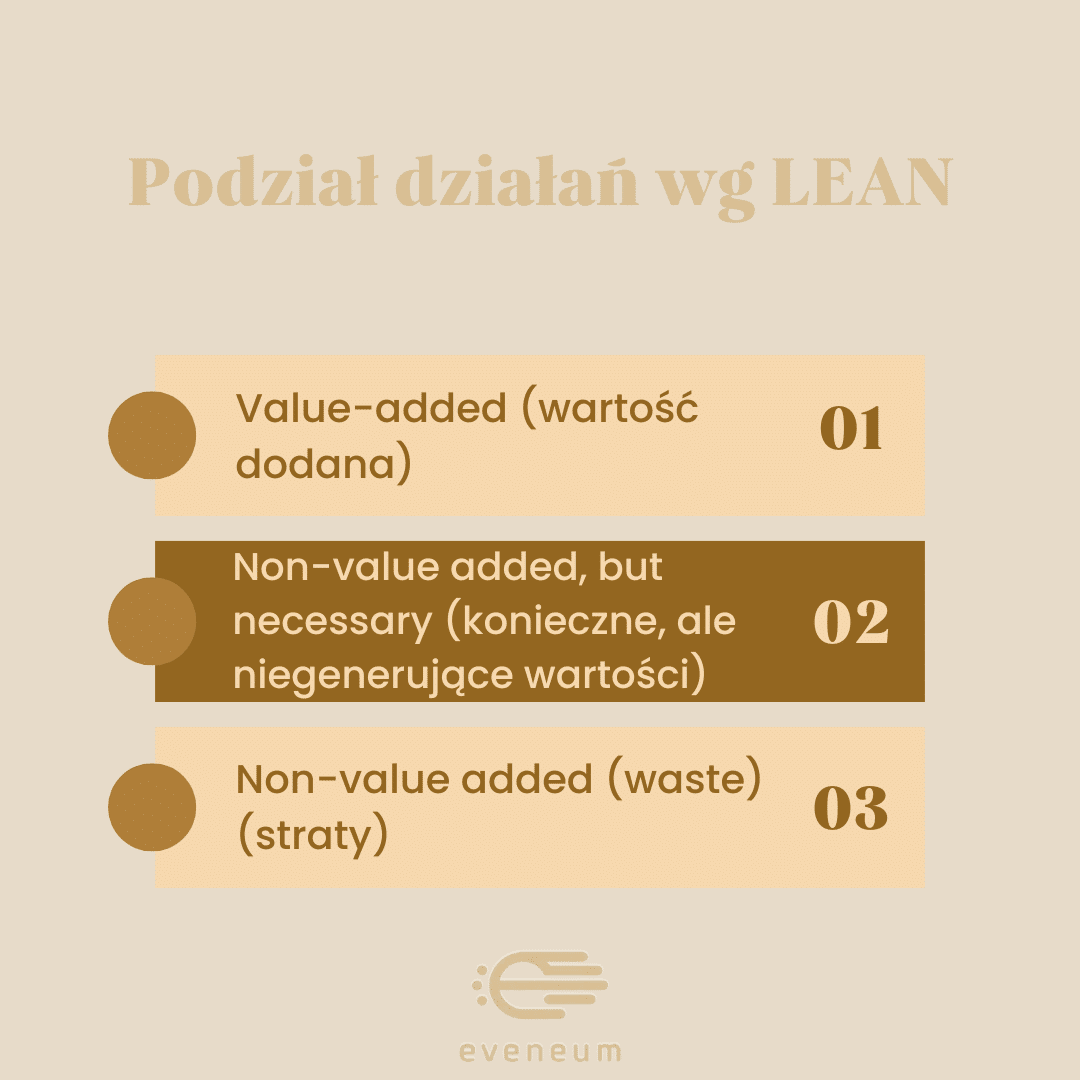
LEAN - a zero waste strategy
Within the LEAN approach, all activities in a process can be divided into three categories:
- value-added - generating value,
- non-value added, but necessary - necessary but not value-generating,
- non-value added (waste) - losses.
Experience shows that, in many cases, the greatest effort put in by purchasing staff is precisely on data collection - a process that can be time-consuming and tedious, and does not necessarily lead to concrete conclusions. Although the collection of information is necessary, it does not in itself generate added value.
Data collection - a necessity, but not an added value
As part of a buying strategy, data collection is a step that can be considered necessary, but at the same time it does not add direct value. Without data, there is no way to draw conclusions, but it is the analysis of this data, the drawing of conclusions and the creation of an action plan that provides the real value. Therefore, focusing on the analysis and development of the plan, rather than the mere accumulation of information, is crucial to the success of the strategy.
Physical or intellectual effort?
The question arises: what kind of efforts are involved in creating a purchasing strategy? It is certainly not just the physical effort involved in collecting data. While this may require commitment and time, the real value lies in the intellectual effort involved in analysing this data and answering the question „what next?”.
Data collection - physical effort
Data collection is a process that can be automated using ERP systems, Excel or AI-based tools. It is rather physical work that is necessary but does not add value.

Data analysis - an intellectual effort
The actual analysis and drawing of conclusions, as well as the identification of further actions, is already an intellectual effort that cannot be automated. It is at this stage that the category manager makes decisions that have a direct impact on the future of the organisation. The development of an action plan, the setting of objectives and the identification of responsibility for action are key elements of strategy that require intellectual commitment, not just technological support.
The role of the category manager
The category manager should focus on this intellectual effort - making plans and setting goals. Tools such as ERP systems, Excel or AI can help gather data, but it is the human being, or more precisely the manager, who is responsible for what is done with that data. Creating a purchasing strategy is not just a matter of collecting data and presenting it. It is a process to improve the company's performance in the future, to show how to achieve better results within a purchasing category and to clearly define responsibility for action.
Intellectual value in the purchasing strategy
A key question in creating a purchasing strategy is to answer the question „So what?”. If the strategy does not answer this question, it is not a strategy, but merely a report. The purpose of a strategy is to identify specific actions that will improve the company's performance in the future, and to engage the organisation to implement those actions.












 Polish
  English