





Negotiation and preparation for negotiation
Appropriate preparation for negotiations can determine their outcome. It could be said that preparation is a key stage in the entire negotiation process - 90% success depends on it. This is when we gather information about the other side of the negotiations, we analyse the internal situation, define objectives and strategies and prepare a team to support us.Negotiation plan It is a good idea to list and, if possible, categorise the issues to be discussed. This will make it possible to keep the conversations on track and maintain order, especially when the topic of negotiation is multi-faceted. Read more...
Four mistakes in preparing for negotiations
Many bosses assess the negotiation skills of their team members based on the negotiation itself, appreciating the dynamics, assertiveness, tactics and style of negotiation. Often, the less feisty are rated less highly, even though they achieve similar results and, in the long term, build better, healthier relationships with their suppliers or clients. Such people know that preparation for negotiations determines 90% the success of substantive negotiations. Being well-prepared and having a well-worked-out negotiating partner, there is no need to make up for it with tactics, improvisation and stardom. Depending on whether the industry in which we operate is relationship-oriented or transaction-oriented, negotiation preparation and its quality can have a significant impact on the achievement of an organisation's annual objectives. Read more...
The Harvard model of negotiation
The idea of the Harvard model of negotiation This involves reformatting the conduct of talks from a competitive to a collaborative nature. In this way, it is possible to arrive at solutions that give equal satisfaction to both parties.What does this look like in the conduct of negotiations? Well, it may mean that the path prepared so far has to be abandoned and a completely new one adopted. The difference is that the course of working out this path is based on the involvement of both sides in the negotiation talks, rather than simply confronting the assumptions and strategies previously adopted. W the harvard model of negotiation We treat the other party not as a rival but as an ally. We are looking for a common goal and we need to find the right way to achieve it so that no one loses out. The perspective of the relationship after the transaction is finalised is also important. This is because it presupposes long-term cooperation and not just momentary and one-off satisfaction. Read more...
Negotiation scenario
Such a document is primarily intended to help us get to know better the counterparty with whom we plan to start the negotiation process. In the post on international negotiations, we wrote about factors that do not go unnoticed during negotiations. It is worth bearing them in mind, but not only when the other party to the negotiation represents another country. When negotiating with compatriots, we should also gather as much information about them as possible. It is a matter of learning about the company culture and mission that the company in question follows, as well as knowing what negotiating styles, if any, the other negotiating party uses. Read more...On the basis of the data collected about the counterparty, we can proceed to prepare a negotiation scenario.
Negotiation in kind
Negotiation in kind represent a compromise between hard and soft negotiations. Recall that the hard style implies competition between participants in business talks with the objective of winning at all costs. Negotiators using this style do not build relationships with the opposing party and do not seek compromise solutions. In contrast, the basis of the soft style is friendly relations and a high level of trust between the participants in the process.The aim of soft negotiation is to seek agreement even at the price of significant concessions.The essence of the substantive negotiations is to solve problems and achieve set goals, i.e. mutually beneficial contracts. To achieve this, it is necessary to be open and try to understand needs. It is also necessary to focus on the problems and how to reach a compromise. Read more...
Can negotiation demotivate your team?
The business environment in which we operate is becoming increasingly complex and unpredictable. Aerospace, engineering, automotive have always operated in such conditions. Similar is happening in an increasing number of industries. Relationships with suppliers, or customers, are becoming multidimensional and multifaceted. Communication takes place multi-channel, simultaneously. Nowadays, negotiations in kind are team negotiations. Your employees prepare for them within interdisciplinary teams, often set up just for a specific project. It becomes crucial to ensure that team members have similar levels of negotiation skills. If there is too much variation in the level of competence of the negotiating team will function badly and the work will consume a disproportionate amount of time in relation to the results. Read more...
Build youth business maturity through negotiation training
Factual training on negotiation as a competitive advantage
Every head of a close-knit team tries to apply a strategy of synergising the talents of individual team members in order to maximise the business result. At the same time, the modern manager tries to ensure a good working atmosphere. Many leaders will sooner or later have to introduce a new member to their team. Often this will be a young person taking his or her first, perhaps second, steps in business. An integral part of building a good working climate is access to modern training that meets the needs of employees. Is training on negotiation can guarantee an accelerated building of business maturity for the new team member? Read more...
Team negotiation
O team negotiations By definition, we speak when a minimum of two representatives of each party are involved in the talks. However, it is worth distinguishing between negotiation groups and negotiation teams. The mere presence of another person does not yet mean that the negotiation being conducted is a team negotiation.What certainly distinguishes a team negotiations, in addition to the larger number of participants in the talks, are, above all, the specific competences of each of them and their active participation in the process, as well as their knowledge of and pursuit of team goals. The negotiation team must be a single organism, striving for the same thing by using the individual parties - i.e. fulfilling the role of each team member.You can test your team negotiation skills during the National Negotiation and Mediation Tournament for Business. Read more...
Multilateral negotiations
The course of business multilateral negotiations, due to the number of participants, is usually more complex than in bilateral negotiations. Therefore, it requires the facilitator to do a much better job of preparing the flow of meetings and clarifying the rules that apply to all participants.The facilitator is then responsible for enforcing the timetable and making sure that the rules are followed. Otherwise, chaos is easily created and it is difficult to reach satisfactory solutions for the parties.W multilateral negotiations It is definitely more difficult to work out win-win solutions. It is therefore necessary to be prepared to make major concessions and to build coalitions. multilateral talks crisis situations are far more likely to arise, requiring participants to make an extra effort to develop new solutions. Read more...
Negotiation versus mediation
Business mediation begin when the two parties to the conflict are unable to come to an agreement on their own. This is when the intervention of a third party, who approaches the subject objectively and is not directly involved, impartial and neutral, is necessary. The signal on the basis of which the decision to involve a mediator should be taken is the moment when the dialogue characteristic of negotiation becomes impossible and instead of leading to an agreement, it only exacerbates the dispute.Mediation can be conducted with both parties to the conflict simultaneously or in separate sessions on an indirect basis. The mediator's assistance is primarily aimed at stopping the deepening of the dispute, clarifying mutual expectations, possibilities and reaching an agreement. The differences are given in a separate entry. Read more...
Phases of business negotiations
The business negotiation process is usually a four-stage process. These stages are preparation, opening, negotiation and closing. What do they consist of? We invite you to read a brief description of each of them:
Phase 1: preparation of negotiations
Phase 2: opening of negotiations and presentation of terms and conditions
Phase 3: negotiation of terms and conditions
Phase 4: Closing of business negotiations and contractRead more...
Win-win negotiations„
Winners and losers in business negotiations. Back in the 1970s, once the business negotiation process was over, it was easy to identify a winner and a loser. After all, negotiations were a competition between two parties, which always ended with one of them winning. In the early 1980s, a new negotiation trend emerged. There were claims that the business negotiation process can take place in a spirit of cooperation, and the goal developed can meet the expectations of both parties. The essence of the new approach is the willingness to solve problems together and to seek converging objectives. Parties to the negotiation „win-win” are characterised by openness and flexibility. These are essential qualities for achieving long-term goals and building sustainable market advantages. Read more...
5 popular negotiation strategies
A strategy of avoidance
Avoidance can be likened to passivity, procrastination, playing for time in the hope that possible disputes will resolve themselves. Letting decisions be made for us and being unwilling to take risks or even take responsibility. It also involves avoiding the other side in a negotiation, which may in effect not only delay the whole process, but may even lead to the breakdown of the negotiation talks.A strategy of submissiveness
Submission or alignment is a way of acting based on sacrificing one's own interests for the benefit of the negotiating partner. It carries the risk of large losses. This attitude allows the other party to steer the negotiation process in such a way as to derive the maximum benefit for itself.We have described the other strategies in a dedicated post.
Price negotiations
Price negotiations they are based on the purchase price of a good or service during the purchasing-negotiation process. They belong to a fairly common form of negotiation. They are not exclusively one-sided negotiations, although they undoubtedly involve a win-lose model. In this type of negotiation, it is difficult to find room for compromise, as any gain for one side, involves a loss for the other. Read more...
5 good times to raise prices to the customer
Depending on the business cycle in the economy, and on the micro scale of our relationship with the client, getting the customer to accept an increase may be difficult or easy to achieve. In this article, I will take a closer look at five situations where receiving a price increase may be simpler and may not damage the long-term business relationship. When considering changing to higher prices, the following situations are worth taking advantage of:
- Actual quantities are much lower than previously contracted
- There are external factors beyond the control of the business partner
- The old merchant has left and a new one has taken his place
- Our company has not won any new business from a client in the last 12 months
Negotiation games
Unlike typical theoretical training, during the negotiation games We are put into pairs or teams and take on a specific role just like the other party. We begin the negotiation process by treating the other party as a counterparty or a vendor - depending on the role adopted - and our task is to achieve a predetermined objective.Negotiation games can take many forms. They come in the form of both practical negotiation workshops, as well as board games that include accessories to enhance gameplay. Each negotiation game is prepared by experts in the field of negotiation. Some are based on generally accepted norms and rules available in textbooks, and some on innovative and original methods. Read more...
Business negotiation training
Negotiation training is an important part of the professional preparation of buyers. By continuously improving their competences, they are able to meet the challenges they face and achieve their objectives. They are also able to prepare for difficult situations and conclude the negotiation process in a way that is most beneficial to both parties. Read more in a dedicated training post.
How to choose the best negotiation training?
The market offer of negotiation training is very rich. For clients, choosing the best one may turn out to be a problem. Therefore, we suggest what criteria to follow when choosing training on negotiation and what should you pay particular attention to? W The following post will focus on three areas:
- experience of trainers,
- negotiation training programme,
- price of the training programme.
Negotiation myths
A large proportion of negotiators mistakenly think that negotiations are a tug-of-war. The effect of this is to assume that if one side wins then the other automatically loses. In a slightly milder version, the negotiation process is also wrongly compared to dividing the pie. If one side gets a bigger piece then the other will be forced to settle for a smaller one.Meanwhile, at most good negotiation training one can learn that the needs of the two parties to a process need not be in opposition to each other. In the vast majority of processes, it is possible to reach a solution that provides the expected benefits to both parties. Such a negotiation is referred to as a „win-win”. Learn about the other negotiation myths.
Businesslike positional negotiation
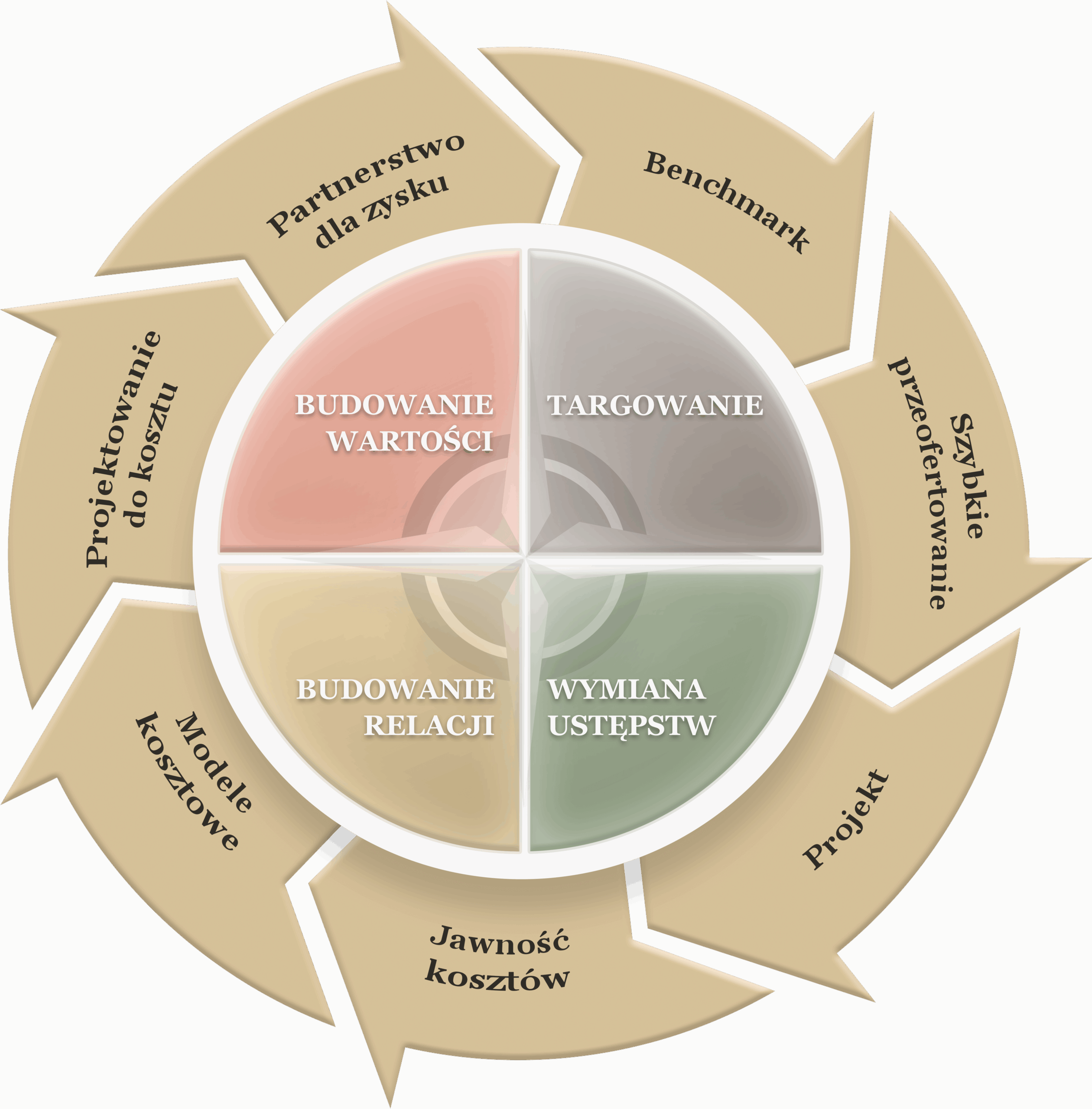
Positional bargaining is a distinctive method of negotiation. They consist of starting the talks by presenting starting positions, i.e. positions that define maximum expectations. Then, through bargaining talks, the parties bargain by nailing down the proposals given earlier. Such type of negotiation is generally used for low-complexity contracts and is usually observed in seller-buyer relationships. The aim of the activities in positional bargaining, is to gain as much advantage as possible for oneself. On the Eveneum® Negotiation Compass, they are referred to as Bargaining or Bargaining for a deal. Read more...
International negotiations
The main challenge here is the participation of participants from different cultural backgrounds. This diversity can often be a factor that hinders conversations. And it is not a question of vocabulary, as these can be mastered to perfection, irrespective of the language spoken.What is extremely important in the preparation phase for the international negotiations, First and foremost, it is important to know the culture of the country our counterpart comes from. Without a thorough knowledge of the customs and values of his or her origin, we should not start discussions. We must remember that what may seem completely normal or unimportant from our point of view, to the other party may be a factor influencing the further course of the talks, and in some situations even be considered offensive and lead to the breaking off of the talks. Read more...
Negotiation styles
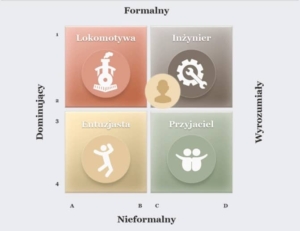
This time we will take a closer look at the different negotiation styles, which are the resultant of a mixture of two dimensions:Formal - InformalDominant - ForbearingThe combination of the above produces four different negotiation styles:
- Locomotive
- Engineer
- Enthusiast
- Friend
Which style of negotiation is adopted in the negotiation strategy will have an impact on the negotiation itself, but also on the outcome and SATISFACTION on both sides of the table. Above all, however, it will determine from the outset the style adopted by the negotiating partner and will give you the opportunity to modify your strategy if necessary. However, it is worth remembering that self-awareness of one's natural preferences and recognition of the partner's preferred style are key. Read more...
Business negotiations with buyers
Negotiation has changed a lot over the last few years. Once upon a time, negotiation techniques were the domain of salespeople and it was they who most often benefited from negotiation workshops and training. Nowadays, their advantage is no longer so pronounced, and this is because buyers have also attached more importance to negotiating. Not only do they have increasingly sophisticated tools to analyse market trends and company performance, but they are also raising their own negotiating competence.Find out what long-time shoppers are saying about working in procurement.Although the bar has been set high for negotiators, they still have many opportunities to gain a negotiating advantage. So what should they be particularly mindful of in their discussions with buyers? Read more...
Remote negotiation - what does it involve?
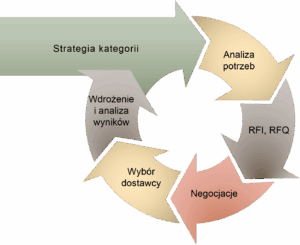
In our daily work, almost everyone has to deal with remote negotiations even if they are not explicitly formulated. Exchanging e-mails with potential customers or contractors at the stage of initial enquiries, answering phone calls with questions about services or available offers, these elements are already an introduction to remote negotiation, so it is worth making skilful use of them. remote negotiation differ from the traditional form of conducting sales talks. Therefore, every negotiator should complement his or her competences with the ability to negotiate remotely. Read more...

Sparring Partner
If you've discussed strategy with us but don't yet feel up to sitting down at the negotiating table with your counterparty, if you know which way you want to go but are afraid of uncertainty and giving up at the most important moment - then you've got a good idea. sparring with Eveneum experts is a tailor-made solution for you.Our consultants, once you have provided the necessary information, will perform a counterparty and market analysis and prepare for the negotiation as if they were negotiating on behalf of your partner. We will play the role of seller or buyer to best prepare you for the real „clash”. Negotiate with us and test yourself before you step into the real ring.
Negotiating Shadow
Negotiation Shadow is the most personalised method of negotiation coaching, after which no negotiation will be a stressful experience for you. Negotiating Shadow also proves itself as a watchdog over the course of negotiations. If the negotiations are heading in the wrong direction, we'll be sure to let you know. What is the Negotiation Shadow with Eveneum all about?
How to use your boss as a tool in negotiations
During one of our webinars, the topic of using the boss in negotiations came up. We also prepared a survey where participants could answer the question „Is the boss useful in negotiations?”. Answer in the recording below:
What is horizon broadening in negotiations?
What is an event horizon in negotiation and what people feel in stressful situations, such as covid19. We invite you to learn more about the concept of the event horizon.
Motivating suppliers to act in a crisis
How can automotive OEM and T1 purchasing motivate suppliers to act adequately?Szymon Tochowicz and Lukasz Staroń discussed this during a November webinar, at the epicentre of the coronacrisis in Europe. Łukasz spoke about positive and negative forms of motivating business partners to act. The gentlemen broke down the topic of supplier negotiations into short-term, ad hoc actions and long-term programmes that can help the entire organisation in negotiating with suppliers.
10 questions before negotiating with trade unions
Cooperation between the Employer and the Trade Unions is a continuous process, based on proper relationship management, agreement on principles of cooperation and communication. It cannot be reduced to ad hoc events or just negotiations. If there is a strike it is usually someone, somewhere, sometime who made a mistake. The situation in our client's company (a group of production plants) has changed compared to previous years. Good relations with the trade unions became quite strained. This was due to an increase in the number of unions and rivalry between them. This led to an escalation of expectations from the Employer, with each union wanting to show the employees how much it cared about them.
Report on the 3rd National Negotiation and Mediation Tournament for Business
The idea behind the event is a team competition in economic negotiation and mediation. Representatives of some of the largest companies in Poland, competed against each other in a business negotiations and mediation, and an experienced jury selected the winners, awarding them with attractive prizes commensurate with the sponsor's industry. We invite you to read and watch a short summary of the tournament, which took place on 21 September at the TAURON Arena Krakow.
Back to hard power: the end of partnerships in business?
Geopolitical and economic changes are prompting companies to abandon partnerships in favour of hard bargaining focused on profit and strategic advantage. The cost-effectiveness of DEI and ESG initiatives, which can undermine competitiveness, is in doubt. Businesses need to adapt to the new reality by combining efficiency with long-term value. Will the partnership approach in business become a thing of the past?











 Polish
  English